How Long Does It Take to Learn a Back Handspring?
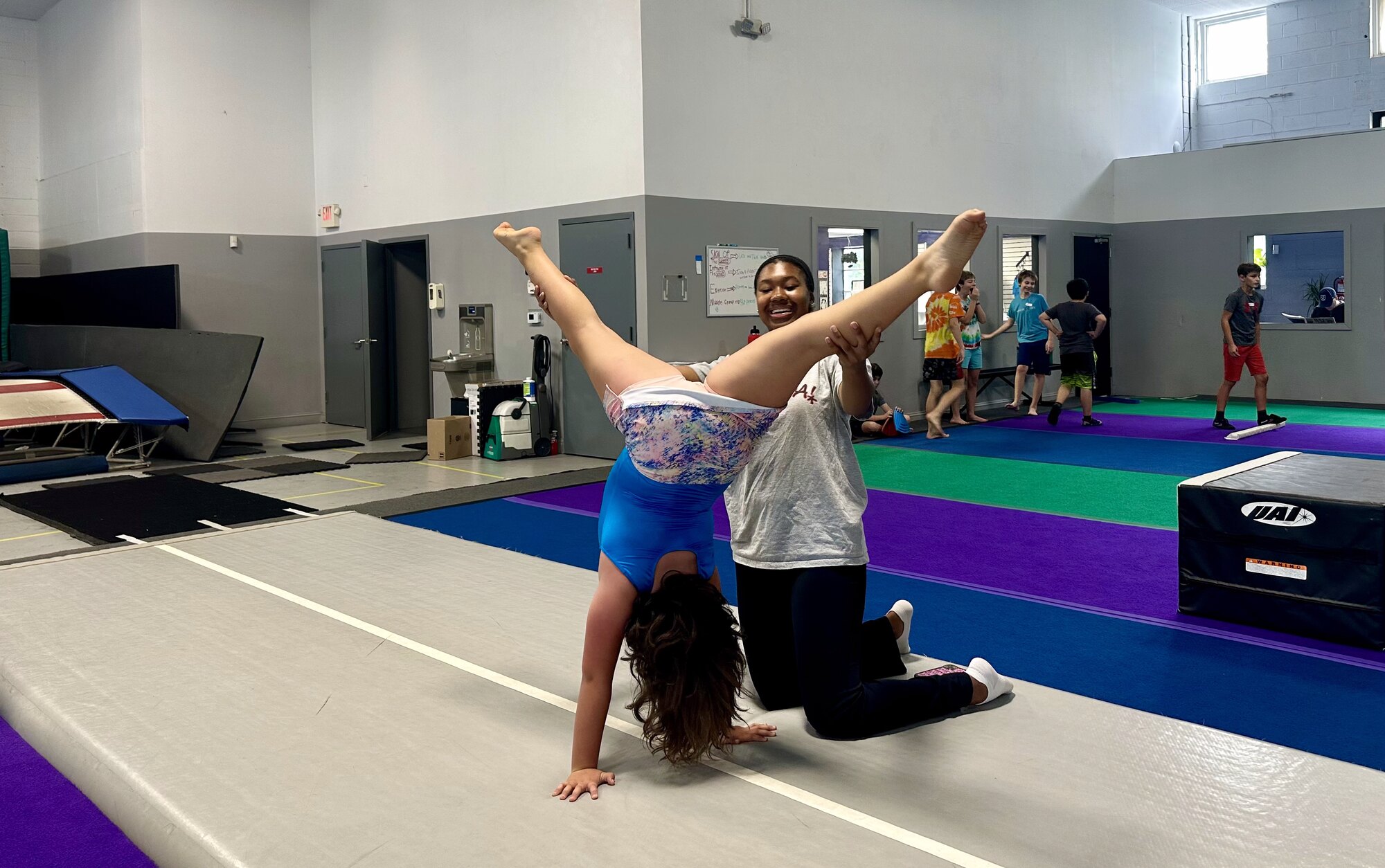
Ask a room full of young gymnasts what skill they want most, and "back handspring" wins every time. Ask their parents, and the question is: how long is this going to take? The honest answer is that it depends — but it's more predictable than you'd think once you know what has to come first.
The short answer
For a child starting from scratch in a weekly class, a back handspring is usually a months-to-a-year-or-more goal, not a weeks goal. Kids who already have strong handstands, bridges, and a back walkover often get there much faster. The timeline is driven by prerequisites, not by how badly a kid wants it (though wanting it helps).
What has to come first
- A solid handstand. Straight, tight, and held for several seconds. A back handspring passes through a handstand, so this is non-negotiable.
- A bridge and shoulder flexibility. Kids need to be able to push up into a bridge with straight arms and open shoulders.
- A back walkover. Not strictly required everywhere, but it teaches the same backward rotation with control.
- Core and leg power. The jump backward has to be strong enough to carry the body over.
- A good round-off. Most back handsprings are eventually done out of a round-off, so it's worth building both together.
How coaches teach it
A back handspring gets broken into drills: sit-and-jump-back drills onto a mat stack, rolling-barrel or wedge work, handstand snap-downs, and heavily spotted attempts. At our gym, kids also use the tumble track and trampoline to feel the motion with more air time and softer landings. Coaches only reduce spotting when the shape is consistent — that's what keeps it safe.
What speeds it up
- Consistency. Showing up every week matters more than any single great class.
- A second weekly class. More reps, more progress. (We take 15% off each additional weekly class.)
- Private lessons. One-on-one time to target the exact piece holding your child back.
- Skill workshops. Focused sessions on specific skills — new dates are added monthly.
- Stretching at home. Bridges and shoulder stretches on the living room floor genuinely help.
What slows it down (or hurts)
Please don't let kids learn back handsprings on a backyard trampoline or from YouTube without a coach. A bent-arm or "head-first" handspring is how wrists, necks, and confidence get hurt, and bad habits are hard to unlearn. A coach's spot is the shortcut.
Which class is best for back handsprings?
Trampoline & Tumbling spends the most time on tumbling skills. Recreational gymnastics builds the same foundation across all four events. Here's how to choose. Classes are capped at 6–8 kids, so every child gets real reps with a coach.
Browse the schedule, check pricing, or contact us and we'll help your gymnast set a realistic goal.